Shopify Collection SEO: The Pages Most Stores Waste
Collection pages target the terms with the most commercial traffic on a store, and most sit with a title and a grid of products. That gap is the easiest win in Shopify SEO.
Why collections matter more than product pages
A product page targets one product. A collection page targets a category, and categories are where the searchable volume lives.
Compare the two queries. Somebody typing "merino hiking socks" is early enough to be choosing between options, and that phrase has many times the volume of any single product name. The page structurally suited to that query is a collection: it shows several options, which is exactly what the searcher wants.
Yet on most stores the collection page is a title, a grid of products, and nothing else. That is a page with almost no text for a search engine to understand, competing for the most valuable terms the store has.
Why they end up empty
Not neglect, mostly. Shopify collections are built to display products, and there is no obvious field in the admin that says "write the page here." The description field exists, sits below the fold in the editor, and is easy to leave blank when setting up a store quickly.
The result is thousands of stores whose most commercially valuable pages contain a heading and some product titles.
What a collection page needs
A description that does real work
Two to four hundred words is enough. What the category covers, who it suits, how to choose between the options shown, and what distinguishes the ones you stock. That is genuinely useful to a shopper deciding, which is why it also works for search.
Buying guidance, not marketing
The strongest collection copy answers the question the shopper is holding: which of these is right for me. Sizing differences, when to pick one material over another, what changes at each price point. A paragraph of that outperforms a page of enthusiasm.
A title in customer language
Collections often carry internal names. "SS24 Drop 2" means something to your team and nothing to a searcher. Name it what people look for.
Placement above or below the grid
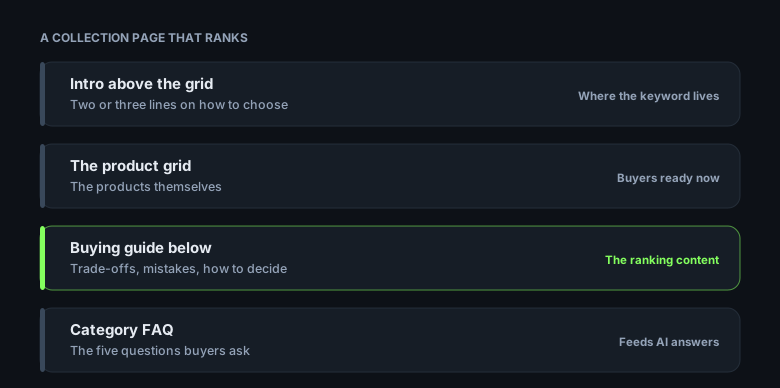
Both work. A short introduction above the products with the longer guidance below is the usual compromise: search engines read the whole page either way, and shoppers who want products immediately are not blocked by an essay.
Want this done for you?
Rankmore writes the cluster, links it, and tracks the rankings.
This is the technical issue specific to collections, and it quietly costs stores more than empty descriptions do.
Filters generate URLs. Filtering by colour, size and price produces addresses that are near-identical to the unfiltered collection and to each other. Left unmanaged, one collection can exist at dozens of URLs, splitting whatever authority it has earned across all of them.
Situation
What happens
What to do
Filtered URLs indexed
Duplicates compete
Canonical to the base collection
Many filter combinations
Crawl budget wasted
Keep them out of the sitemap
A filter with real demand
Genuine missed page
Make it its own collection
Sort order in the URL
Identical content, new address
Canonical to the base
The third row is the interesting one. If "waterproof hiking boots" has real search demand, that should be its own collection with its own description rather than a filtered view of the boots collection. Filters are for browsing; collections are for ranking.
Writing one, start to finish
An example is more useful than a rule. Take a hiking socks collection carrying eight products across three materials.
Open with the category, not the brand
The first two sentences state what the category is and who buys it. A reader who landed from a search should know within seconds that they are in the right place, and a search engine should be able to tell what the page covers from the opening alone.
Explain the choice the shopper is making
Here that is material. Merino regulates temperature and resists odour, synthetics dry faster and cost less, blends compromise. Two sentences each. This is the section that earns the page, because it is the question the shopper actually has and it is absent from almost every competitor.
Add the practical detail nobody publishes
Sizing behaviour, how they wash, how long they last, which suits wide feet. This material usually already exists in your support inbox, and it is the part no manufacturer description contains.
Close with what you do not stock and why
Naming what a category deliberately excludes builds more trust than any claim about quality, and it prevents the visits that would never convert.
Which collections deserve the work
Not all of them. Most stores have a handful of collections that map to how customers actually search, and a long tail created for merchandising: sale, new arrivals, staff picks, seasonal groupings.
The merchandising ones are useful in the shop and worthless in search, because nobody searches for your staff picks. Write descriptions for the collections that match real categories, and leave the rest to do their job on-site.
A quick test: would a stranger type this collection name into Google? If not, it does not need SEO copy.
Collections compared with products and content
Product pages
Collections
Content
Ranks for
The product
The category
Questions
Buyer stage
Decided
Comparing
Researching
Relative volume
Low
Medium to high
High
Converts
Directly
Directly
Indirectly
Typical state
Thin
Empty
Absent
Collections sit in the most commercially useful position of the three: enough traffic to matter, and a visitor close enough to buying to convert. That combination is why an empty collection page is the most expensive blank space on a Shopify store.
Pagination on large collections
Collections with many products split across pages, and those subsequent pages create a quieter version of the filter problem. Page two of a collection has the same description, the same title, and different products.
The usual handling is to let paginated pages exist and be crawled while keeping the description and any ranking intent on the first page. What causes trouble is duplicating the full description across every page, which produces many pages carrying identical copy competing for the same term.
If a collection is large enough to need heavy pagination, that is often a sign it should be several collections. Splitting by the distinction customers actually search on produces pages that each target something, instead of one page target diluted across ten paginated addresses.
Structured data and internal links
Collection pages benefit from breadcrumb markup showing where they sit in the hierarchy, which is more useful here than anywhere else on a store because collections are the level a hierarchy is actually visible at.
Internal linking matters in both directions. Your navigation already links to collections, which is why they tend to be the strongest pages on a store by internal links alone. What is usually missing is content linking in: an article about choosing hiking socks should link to the socks collection, not only to one product.
How to prioritise across a whole store
Most stores have between five and fifteen collections worth writing for, and doing them in the right order matters when time is limited.
Start with collections already receiving impressions. Search Console will show which category pages are being shown and passed over, and a collection appearing regularly without clicks is a page Google already understands and shoppers are not choosing. Adding buying guidance to that page changes an existing impression into a visit, which is far faster than earning new impressions from nothing.
Next take the collections matching your highest margin categories, whether or not they currently rank, because those are the pages worth owning long term.
Leave the long tail alone until the first two groups are done. A store that writes ten strong collection descriptions beats one that writes sixty thin ones, and the thin sixty carry a real risk of looking like bulk-generated filler.
Common mistakes
Leaving descriptions empty. The single most common and most costly omission on Shopify stores.
Writing copy nobody reads. Three hundred words of category history helps nothing. Answer how to choose.
Creating a collection per filter. Dozens of near-identical collections compete with each other.
Deleting seasonal collections. A collection that ranked last year will rank again. Keep the URL, update the products.
Internal names as titles. Nobody searches your season codes.
Ignoring empty collections. A collection with no products in stock is a poor landing page and should redirect or be hidden.
Who this is for
This applies to any store with more than a handful of products, and it is most valuable for stores whose categories match how people search: clothing, supplements, tools, hobby equipment, anything where buyers think in categories before brands.
Stores with one or two products do not really have collections worth optimising, and the effort belongs on product pages and content instead.
Final thoughts
Collection pages are the most under-used asset on most Shopify stores. They already carry internal link authority from your navigation, they target the terms with real commercial volume, and they reach buyers at the point of comparison.
Most of them need one thing: a few hundred words that help someone choose. That is a smaller job than it sounds, it needs doing on perhaps ten pages rather than a hundred, and it is the highest return per hour available in Shopify SEO.
Frequently asked questions
Do Shopify collection pages help SEO?
They are often the most valuable pages on a store. Collections target category terms, which carry far more search volume than individual product names, and they reach buyers at the comparison stage when they are close to purchasing.
How long should a collection description be?
Two to four hundred words is enough. The content matters more than the length: explain what the category covers, who it suits, and how to choose between the options, since that is what a shopper is deciding and what a search engine can index.
Where should the collection description go, above or below the products?
Either works for search engines, which read the whole page. A short introduction above the grid with longer guidance below is the common compromise, since it does not block shoppers who came to browse products immediately.
Do Shopify collection filters hurt SEO?
They can. Filters generate URLs that are near-duplicates of the base collection, and if those get indexed they split the collection's authority across many addresses. Canonical tags pointing back to the base collection resolve it.
Should I create a collection for every filter?
Only where the filter matches genuine search demand. If people search for waterproof hiking boots, that deserves its own collection with its own description. Creating collections for every possible filter combination produces near-identical pages competing with each other.
Should I delete seasonal or empty collections?
Do not delete collections that have ranked, since the URL is an asset and will rank again when restocked. Keep it and update the products. Collections that are permanently empty should redirect somewhere useful rather than showing a blank page.
Which collections should I write descriptions for?
The ones matching how customers search. Merchandising collections like sale, new arrivals or staff picks are useful on the site and worthless in search because nobody searches for them. A useful test is whether a stranger would type the collection name into Google.
Are collection pages better than blog content for SEO?
They do different jobs. Collections rank for category terms and convert directly. Content ranks for research questions, brings more traffic, and passes readers to collections and products. Stores need both, and collections are usually the faster win because they already carry internal link authority.